
Spatial … the final frontier.
Spatial research is like the HD or 4K upgrade from the grainy black-and-white film days of conventional tissue analysis. As spatial scientists, we’ve experienced firsthand the benefits of understanding the intricate neighborhood dynamics of cells in their spatial contexts. This approach to molecular research can unlock secrets about disease mechanisms and therapeutic responses never before accessed in the field. As pharma and biotech companies increasingly leverage spatial biology, you want to tailor your research to keep it both meaningful and relevant – and this means choosing the right spatial platform.
Overwhelmed by choice? BioChain’s got your back.
Choosing the right spatial biology platform is crucial for molecular scientists aiming to uncover intricate cellular landscapes. Key considerations include resolution and sensitivity for single-cell imaging, multiplexing capabilities to analyze multiple biomarkers simultaneously, and robust data integration for comprehensive insights. Sample compatibility, scalability, and reproducibility ensure research flexibility and reliability, while customization and expert support streamline workflows.
At BioChain Institute, Inc., we’re proud to offer a suite of advanced spatial platforms and spatially characterized biospecimens designed to elevate your research. Foremost amongst these are 10x Genomics’ Visium HD and Xenium Prime 5K, two powerhouse spatial transcriptomics platforms with unique applications and a host of new features. Both are designed to deliver high-resolution spatial gene expression data, but they differ in terms of technology, capabilities, and ideal use cases. We know that picking the right tool for your project’s needs is critical, so we’ve created this helpful comparison guide to help you make your decision:
Visium HD is unbiased discovery.
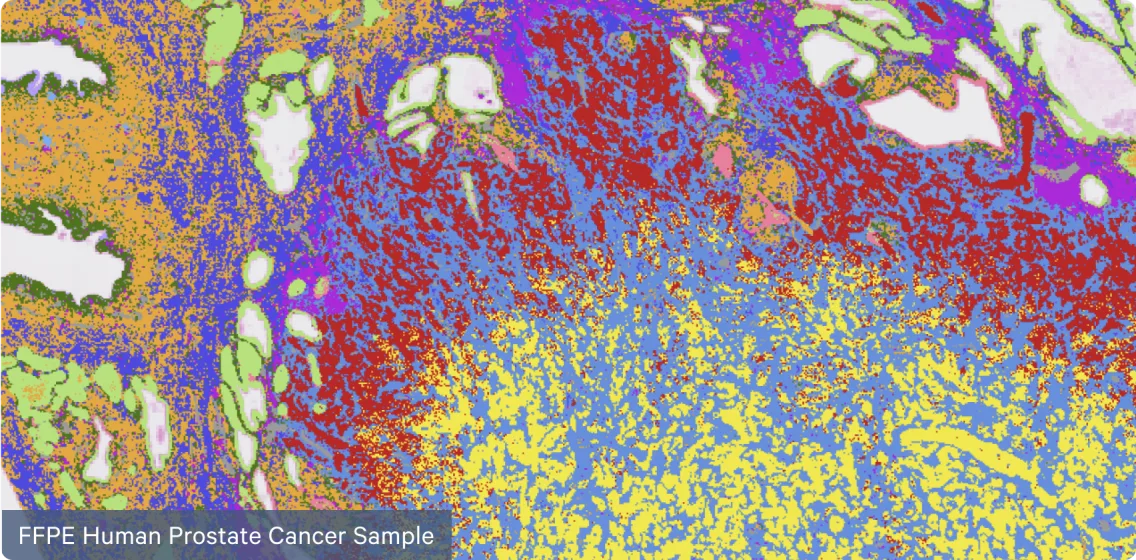
Building upon the original Visium platform, Visium HD features a continuous lawn of oligonucleotides arrayed in millions of barcoded squares without gaps, achieving single cell–scale spatial resolution. This design allows for precise visualization of protein, total mRNA, and tissue morphology with uninterrupted coverage. Visium HD is exceptionally sensitive, detecting even low-abundance genes. Additionally, the integration of the Visium CytAssist technology facilitates seamless transfer of gene expression probes from tissue sections onto Visium HD slides, ensuring accurate spatial data capture.
Visium HD offers high-resolution spatial transcriptomics data with 2 µm resolution, allowing for high precision in spatial mapping of gene activity at the cellular level. It’s a tissue architecture fiend: its high-res analysis capabilities shed precise light on tumor microenvironments, neurodegenerative diseases, and complex tissues. If you require a wide-scale gene expression analysis and want to see how gene activity correlates with spatial tissue structure, Visium HD is an excellent choice.
Its optimized workflows and bioinformatics integration simplify data processing and analysis. Finally, whether you’re working with fresh frozen or FFPE tissue, this versatile platform is ready to bat for your team.
Key Features:
Best Suited For:
Xenium Prime is precision insights.
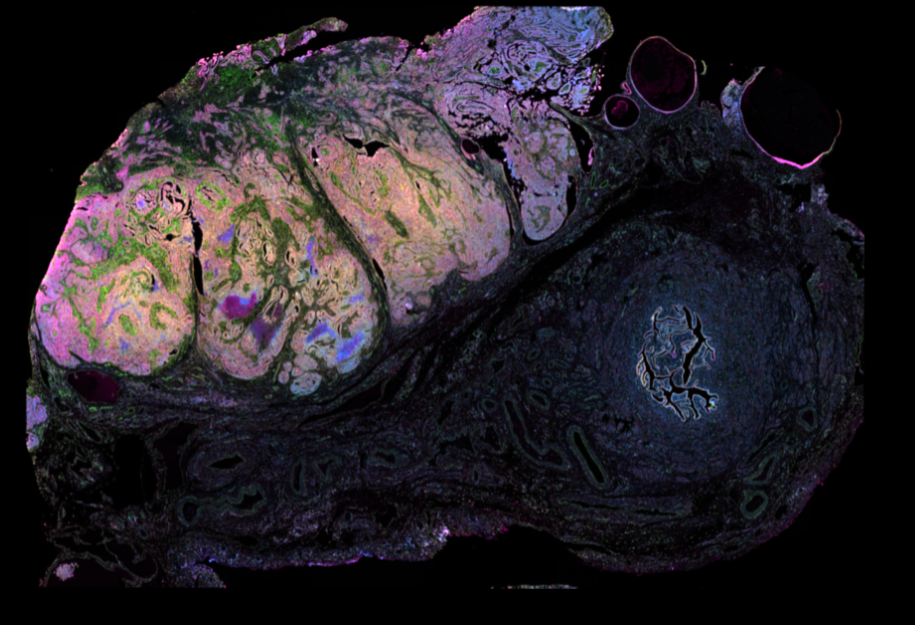
As an advancement in previous Xenium tech, Xenium Prime 5K from 10x Genomics is specifically designed for single-cell resolution capturing of a much larger number of genes than traditional technologies. This makes it ideal for more in-depth cellular analysis exploring heterogeneity of gene expression across tissue types like tumors, immune landscapes, or in neuroscientific studies. It offers single-cell spatial imaging of up to 5,000 genes across entire tissue sections.
This platform utilizes the Xenium Prime 5K pan-tissue and pathways assays, which are expertly curated panels enabling comprehensive exploration of biological materials with exceptional sensitivity, specificity, and spatial fidelity. As the researcher, you can customize your Prime assays by adding 50 to 100 additional genes, allowing tailored analyses to meet your specific research needs.
It has higher processing times and higher throughput capabilities than its peers and predecessors but doesn’t sacrifice that coveted precision or reliability. Like Visium HD, this platform is compatible with both fresh frozen and formalin-fixed, paraffin-embedded (FFPE) tissues, providing versatility across various sample types. If you have specific, focused gene expression questions, this platform may be the one for you.
Key Features:
Best Suited For:
That was a lot of information to absorb at once. The main things to consider when making your choice can be simplified into a handy acronym: RSGT. R is for resolution needs. S is for study type. G is for gene expression scope. And finally, T is for what tissue type you are working with! We’ve detailed all these platforms’ key features for you in a handy comparison table below:
At BioChain Institute, Inc., we understand that choosing the right spatial biology platform is a critical decision for your research success. That’s why we offer a comprehensive suite of spatial platforms, with Xenium Prime 5K and Visium HD at the top of that list. Schedule a free consultation call to discuss what works best for your specific research goals.
Are you ready to take your spatial research to the next level?
Contact BioChain today with any questions or to discuss how our solutions can help you achieve impactful, high-resolution insights into your research.